Black Tentacles in Warlock: Dungeons & Dragons
The official Advanced Spell that pins enemies and doubles as an exploration platform
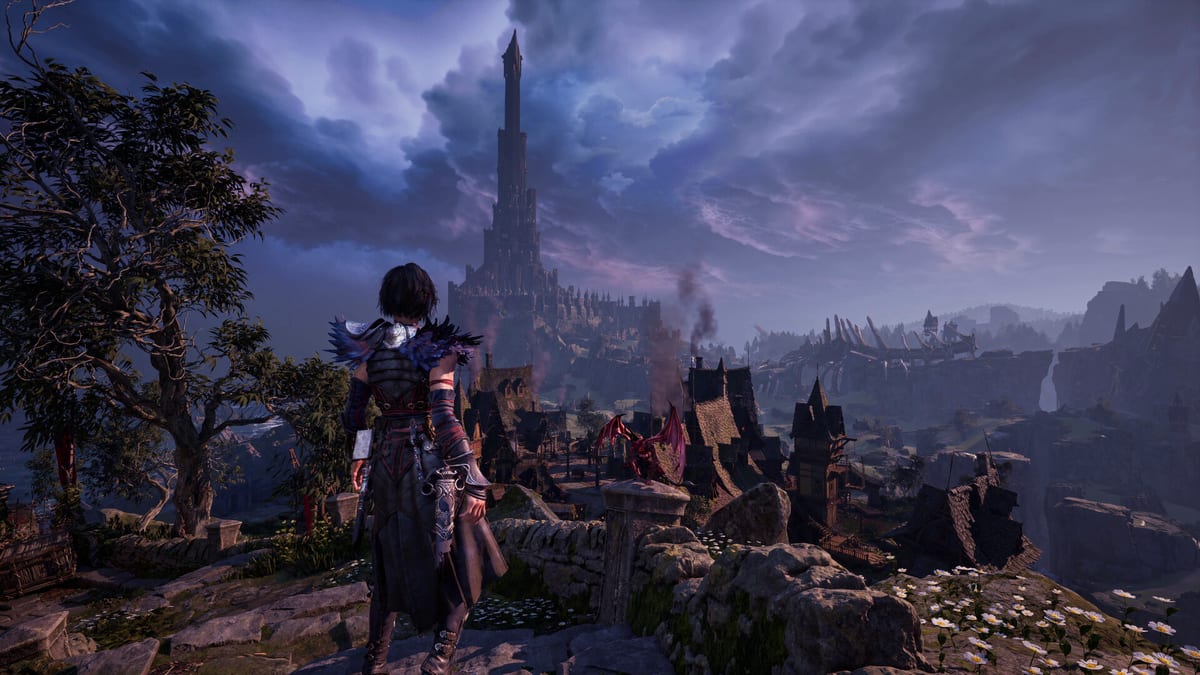
The official Warlock site describes Black Tentacles in one sentence: summon a patch of black tentacles on any tangible surface. They will coil around any object or enemy that comes into close vicinity, thus holding them in place. That is the entire tooltip. It appears in the partial grimoire alongside Eldritch Blast, Witch Bolt, Gust of Wind, Levitate, Fey Switch, Misty Step, Tasha’s Leash, a long jump, and the Downpour ritual. The label on the official site reads Advanced Spell, not cantrip. That distinction matters: it commits with a slow-motion animation and then enters a cooldown window, per Invoke’s public model. This page is the tentacle patch, not the dungeon master’s monster manual.
An Advanced Spell with two jobs
Tabletop readers arrive expecting a 5th-level spell from the Dungeon Master’s Guide, complete with damage, a grapple radius, and concentration. Invoke’s public model does not paste those numbers. What the tooltip delivers is a conjuration that coils and holds — it pins movable objects and enemies on contact, and it does so on a tangible surface the player chooses. That is the legal text. Until Invoke publishes a stat block or a confirmed damage figure, this page describes what the tool does rather than what the table says it should.
The two functional jobs are control and traversal. In combat, the tentacles act as a zone — anything that walks into the patch gets held, buying time or setting up a follow-up from witch bolt in wet environments, a stolen weapon via Tasha’s Leash, or a finishing blow in combat. In exploration, the tentacle field functions as a catch surface: Kaatri can throw or drop stones into the patch and the tentacles grip them, creating a climbable handhold where none existed. That is the official description in the coverage — an exploration platform, not a weapon first.
How the commit and cooldown work
The slow-motion commit means the player triggers the cast, watches the animation play, and then the spell becomes active on the surface. After that window closes, the cooldown begins. This is the standard Invoke model for Advanced Spells: deliberate cast, active effect, then a wait before reuse. The exact duration of the cooldown has not been published. The exact duration of the hold once something enters the patch has not been published either. Do not add a seconds count. Do not label it crowd-control with a tier rating. If a later trailer or official blog post names those numbers, they belong on this page with the source and the date.
How it sits next to other tools
Eldritch Blast is the always-available delete button at range. Witch Bolt is a lightning beam that wants water and metal to be interesting. Black Tentacles is a placed zone that holds. Fey Switch is the panic teleport. Misty Step is the short-range blink. Levitate and Otherworldly Leap are vertical tools. Gust of Wind is crowd push. The combo page treats Black Tentacles as the set piece that lets other spells land — pin, then follow up. How to use spells is the tutorial for layering these choices. Cantrips vs advanced is the taxonomy that explains why this is labeled Advanced Spell and not Cantrip.
Kaatri is a veteran weapons master who also carries this spell in her grimoire. Tasha, her patron voiced by Maggie Robertson at Gen Con 2026, is the source of much of the darker conjuration in the game. The tentacle imagery fits that patron’s portfolio. Skev comments on the world’s strangeness but is not the caster. Darkon, the Domain of Dread setting, provides the terrain where a patch of black tentacles feels at home — twisted architecture, fog, and no reliable light.
Exploration use: catching stones to climb
The official coverage mentions Kaatri using the tentacle patch as an exploration tool: drop or throw a stone into the active patch, the tentacles grip it, and she climbs the formed handhold. This is not a published puzzle solution — it is a mechanical description of what the tool does when the player chooses to use it that way. Any surface that is tangible and within range can receive the patch. The stone-catching is a player decision, not a hidden interaction.
This pairs with Otherworldly Leap for verticality, with Levitate for controlled ascent, and with exploration for the broader question of how to read a space for its climbable geometry. How to explore Darkon is the guide for that reading. The Domains of Dread setting — Darkon, Crickshank, and the broader Domains of Dread — are designed for exactly this kind of creative traversal.
What this page refuses
No damage numbers. No cooldown seconds. No grapple check DCs. No “best Black Tentacles build.” Builds on this wiki are Pact of the Blade thinking plus spell loadouts, not numeric ranks pasted from the Monster Manual. Talismans that synergize with favorite spells were mentioned by Jeffrey Hattem without a named Black Tentacles charm — when one exists, it belongs on builds with a source.
Watch the how to play coverage for the eight-minute walkthrough. Use the spell combo planner to sketch pin-then-blast sequences without inventing cooldowns. Read combat for Watchers and ogres — the tentacle pins, the weapon finishes. Read mysteries and rituals for the broader magic ecology.
How to watch for it in the next trailer
When Invoke drops a Fall 2026 clip, pause on every surface that is not flat ground. A writhing dark patch on a wall, a ledge, or a floor that was previously empty is this page’s job. If the patch grips a stone Kaatri threw, write “stone-catching confirmed” here with the clip date. If the tentacles appear during a fight and an enemy is visibly held, write “pin confirmed” with the same diligence. If the patch only ever appears on floors, note that the tooltip says “any tangible surface” and the wall-mounted use is an open question until a trailer shows it. The tooltip is the legal boundary. The trailer is the expansion.
Notes on spells/black-tentacles-en-0 stay unique. Every language variant of this page carries its own disclaimer block with its own Notes line. The footer below is not a translation — it is a structural signal that this wiki does not invent stats.
What we still refuse to invent on this page: No damage, no cooldown duration, no hold duration, no range number, no area-of-effect diameter, no talisman names, no “best build,” no DPS sheet, no campaign hour estimate, no skill-tree placement, no boss name, and no invocation list. If it is not in the official tooltip or confirmed by Invoke Studios in an official channel, it is not here. When an official source names a number, this page updates with a source and a date. Until then, the tooltip is the contract.
Related: spells hub, Eldritch Blast, Witch Bolt, Tasha’s Leash, Raw Magic, controls, Tasha.
Frequently Asked Questions
Quick answers drawn from official Warlock: Dungeons & Dragons reveals and studio interviews.
Is Black Tentacles a cantrip in Warlock?
No. The official site labels it Advanced Spell, which means it commits with a slow-motion animation and then goes on cooldown. That is a different model from the always-available cantrip layer.
Can enemies break free from the tentacles?
The tooltip says they coil around and hold. Whether they can be broken, cut, or waited out has not been published. Do not paste a grapple DC from the tabletop version.
How does the stone-catching exploration use work?
Kaatri throws or drops a stone into the active tentacle patch. The tentacles grip it, forming a climbable handhold. This is described in official coverage as a player-driven traversal option, not a hidden interaction.
Can the tentacles be placed on any surface?
The tooltip says any tangible surface. Floors, walls, and ceilings that are solid enough to touch are candidates. Whether there is a range limit or a size limit has not been confirmed by Invoke.